In an exciting development for fans of historical anime, Anime News Network reports that Kazuto Mihara’s critically acclaimed manga The World Is Dancing is receiving a television anime adaptation, scheduled to premiere in Summer 2026. The announcement, made by production company Shochiku, has unveiled key details about this ambitious project that will bring the captivating world of 14th-century Japanese Noh theater to life through animation.
This adaptation marks a significant moment for historical anime, as The World Is Dancing explores one of Japan’s most revered cultural treasures through the eyes of its legendary founder. The series promises to transport viewers to a turbulent era of Japanese history while celebrating the artistic revolution that would shape centuries of theatrical tradition.
A Journey into Japan’s Theatrical Past
Set in 1374 during the chaotic period of Japan’s Northern and Southern Courts conflict, The World Is Dancing follows a young boy named Oniyasha, born into a family of sarugaku theater performers. The protagonist grapples with a fundamental existential question that drives the entire narrative: “Why do people dance?” This deceptively simple query becomes the foundation for a profound exploration of artistic expression, cultural identity, and the search for meaning through performance.
What makes this story particularly compelling is that Oniyasha is not merely a fictional character—he represents the childhood name of Zeami Motokiyo (c. 1363-1443), the historical figure credited with perfecting Noh theater into the refined art form recognized today. Zeami, along with his father Kan’ami, transformed sarugaku—a popular entertainment form combining acrobatics, dance, and comedic elements—into Noh, a sophisticated theatrical tradition that would become one of the world’s oldest surviving theater arts.
From Page to Screen: The Creative Team
The anime adaptation will be produced by CygamesPictures, a studio that has built a strong reputation for quality productions including Uma Musume: Cinderella Gray, The Summer Hikaru Died, and the original anime Brave Bang Bravern! The studio’s involvement suggests a commitment to maintaining high production values and respecting the source material’s cultural significance.
Directing the series is Toshimasa Kuroyanagi, whose previous works demonstrate a particular aptitude for thoughtful, character-driven narratives. His credits include The Great Passage, an anime about dictionary compilation that found beauty in linguistic dedication, and Backflip!!, which explored the world of men’s rhythmic gymnastics. This track record suggests Kuroyanagi possesses the sensitivity required to handle The World Is Dancing‘s nuanced exploration of artistic pursuit and cultural tradition.
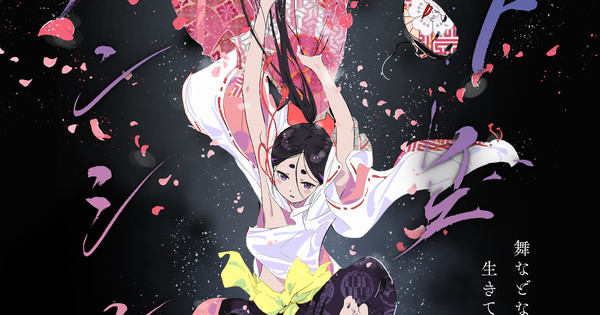
Character design duties fall to Keigo Sasaki, who has already created a striking teaser visual that captures the aesthetic of 14th-century Japan. The visual showcases Oniyasha in traditional sarugaku performer attire, hinting at the series’ commitment to historical authenticity while maintaining anime’s visual appeal. Additional artistic touches include calligraphy and title lettering by Satoshi Nemoto, emphasizing the production’s attention to period-appropriate details.
Voice Acting Talent: Yumiri Hanamori Takes Center Stage
Voice actress Yumiri Hanamori has been cast as protagonist Oniyasha, bringing her considerable range to this challenging role. Hanamori has demonstrated remarkable versatility throughout her career, voicing characters as diverse as the enthusiastic and cheerful Nadeshiko Kagamihara in Laid-Back Camp and the cool, calculating Ai Hayasaka in Kaguya-sama: Love Is War. Her ability to embody vastly different character types suggests she can capture both Oniyasha’s youthful uncertainty and the artistic passion that will eventually transform him into one of history’s greatest theatrical innovators.
The casting choice reflects the production’s understanding that Oniyasha’s journey requires an actor capable of conveying internal struggle and gradual transformation. As a character haunted by philosophical questions about the purpose of performance, Oniyasha needs a voice that can express doubt, wonder, and eventual artistic revelation.
Understanding Sarugaku and Noh Theater
To fully appreciate The World Is Dancing, it helps to understand the historical context of sarugaku and its evolution into Noh theater. Sarugaku originated from sangaku, a collection of various performance arts brought to Japan from China during the 8th century. These performances included acrobatics, magic, juggling, and comedic sketches, serving primarily as popular entertainment at religious festivals held at temples and shrines.
By the 14th century, sarugaku had evolved to incorporate dramatic elements, narrative dances, and musical accompaniment. The name itself—sarugaku—translates roughly to “monkey music” or “comical performance,” reflecting its origins as entertainment for common people. However, the art form was on the cusp of transformation when Kan’ami and his son Zeami began their revolutionary work.
What distinguished Zeami’s approach was his incorporation of elements from other performance traditions, particularly dengaku (agricultural performance arts) and kusemai (narrative dances), while infusing the performances with refined aesthetics drawn from classical literature and Buddhist philosophy. He transformed sarugaku from popular entertainment into an art form that could appeal to aristocrats and shoguns while maintaining its emotional core.
The historical Zeami’s life provides fascinating context for the anime’s narrative. At age 11 (around 1374, the year the anime begins), he performed with his father before Shogun Ashikaga Yoshimitsu at Imakumano. The young shogun was so impressed that he became Zeami’s patron, providing the stability and resources necessary for artistic experimentation and refinement. This patronage allowed Zeami to develop Noh into the sophisticated art form that would eventually be designated as a UNESCO Intangible Cultural Heritage.
The Original Manga’s Journey
Kazuto Mihara’s The World Is Dancing manga was serialized in Kodansha’s Morning magazine from March 2021 to October 2022, concluding with six collected volumes. The manga earned praise for its meticulous historical research, beautiful artwork, and sensitive portrayal of artistic struggle. Kodansha Comics publishes the series in English, making it accessible to international audiences interested in Japanese cultural history.
The manga’s approach to its subject matter balances historical authenticity with emotional accessibility. While grounded in the realities of 14th-century Japan—including the political turmoil of the Northern and Southern Courts period—the story focuses on universal themes of artistic purpose, self-doubt, and the transformative power of witnessing truly exceptional performance. This combination of specific historical detail and universal emotional resonance makes the story compelling even for readers unfamiliar with Noh theater.
What Makes This Adaptation Unique
Historical anime exploring traditional Japanese performing arts remain relatively rare, making The World Is Dancing a noteworthy addition to the medium. While anime frequently draws on Japanese history for settings and inspiration, few series have tackled the development of classical performing arts with such focus and seriousness. The closest comparison might be Chihayafuru, which brought competitive karuta (traditional card games) to mainstream anime audiences, or Rakugo Shinjuu, which explored the world of traditional storytelling.
The World Is Dancing has the potential to introduce international audiences to Noh theater’s history and significance while telling a compelling coming-of-age story. The anime medium offers unique advantages for this adaptation—the ability to animate the dances and performances that form the story’s emotional core, bringing them to life in ways that static manga panels cannot fully capture.
The collaboration between Shochiku and CyberAgent as co-producers also signals confidence in the project’s commercial and cultural potential. Shochiku, a major Japanese entertainment company with over a century of history in film and theater production, brings expertise in traditional performing arts, while CyberAgent’s digital media experience ensures the anime reaches contemporary audiences through modern distribution channels.
Anticipating Summer 2026
As Summer 2026 approaches, The World Is Dancing represents one of the season’s most intriguing offerings. The series promises to deliver not just entertainment, but cultural education wrapped in compelling narrative and stunning visuals. For anime fans interested in Japanese history, traditional performing arts, or simply well-crafted character-driven storytelling, this adaptation offers something genuinely distinctive.
The anime’s success could potentially spark renewed interest in Noh theater both in Japan and internationally, much as other historical anime have driven tourism and cultural engagement. Whether viewers come for the historical setting, the artistic themes, or the promise of watching a young artist’s transformation, The World Is Dancing appears poised to make a significant impact.
According to Anime News Network’s report, the project is progressing with a clear vision and strong creative team. With its Summer 2026 premiere window approaching, fans can look forward to experiencing this unique blend of historical drama, artistic exploration, and coming-of-age narrative that promises to answer Oniyasha’s persistent question: “Why do people dance?”